With the widespread adoption of smart home technology, users are demanding higher levels of comfort, convenience, and hygiene from bathroom products. As a typical example of smart bathroom technology, remote-controlled toilet lids utilize electronic control technology to enable contactless operation of functions such as seat heating, warm water flushing, and warm air drying. Their design principles integrate multidisciplinary expertise, including mechanical engineering, electronic control, and materials science. This article will systematically analyze the design principles of remote-controlled toilet lids from three perspectives: core functional modules, control system architecture, and key technology implementation.
Core Functional Modules and Basic Design Logic
The fundamental functions of remote-controlled toilet lids revolve around "optimized human-computer interaction." Their physical structure can be divided into two major modules: a mechanical actuator unit and an electronic control unit.
1. Mechanical Actuator: The Physical Carrier for Functional Implementation
The mechanical part directly implements the toilet lid's functions and primarily includes the following components:
• Seat and cover: Injection-molded from antibacterial engineering plastics (such as ABS or PP), often with an anti-fouling coating. The seat has a built-in heating membrane or ceramic heating element, which maintains a constant temperature through heat conduction (typically maintained at 35-40°C, a comfortable range for humans).
• Flushing system: Consists of a micro-pump, solenoid valve, nozzle, and water piping. The pump pressurizes water from the tank, and a solenoid valve controls the direction of water flow (e.g., switching between posterior and feminine wash modes). The nozzle is typically retractable and has self-cleaning features (e.g., pulse flushing or UV sterilization).
• Drying system: Based on a combination of a PTC ceramic heating element and a turbofan, it circulates hot air to accelerate moisture evaporation from the skin's surface. The temperature and air speed are programmable (typically between 40-60°C, with multiple speed settings). 2. Electronic Control Unit: The "Brain" and "Nerves" of Functionality
The electronic component is responsible for receiving commands, processing logic, and driving mechanical components. Its core components include:
• Main control chip (such as an ARM Cortex-M series microcontroller): Integrates data processing, mode storage (such as user preference memory), and fault diagnosis functions;
• Sensor suite: Includes temperature sensors (to monitor seat, water, and ambient temperatures), water level sensors (to detect tank water level), and pressure sensors (to sense seat occupancy), providing real-time data for precise control;
• Power management module: Accepts AC 220V input and converts it to low-voltage DC (such as 12V/5V) via a transformer and voltage regulator circuit. Some high-end products feature a lithium battery backup power supply to ensure basic functionality during power outages.
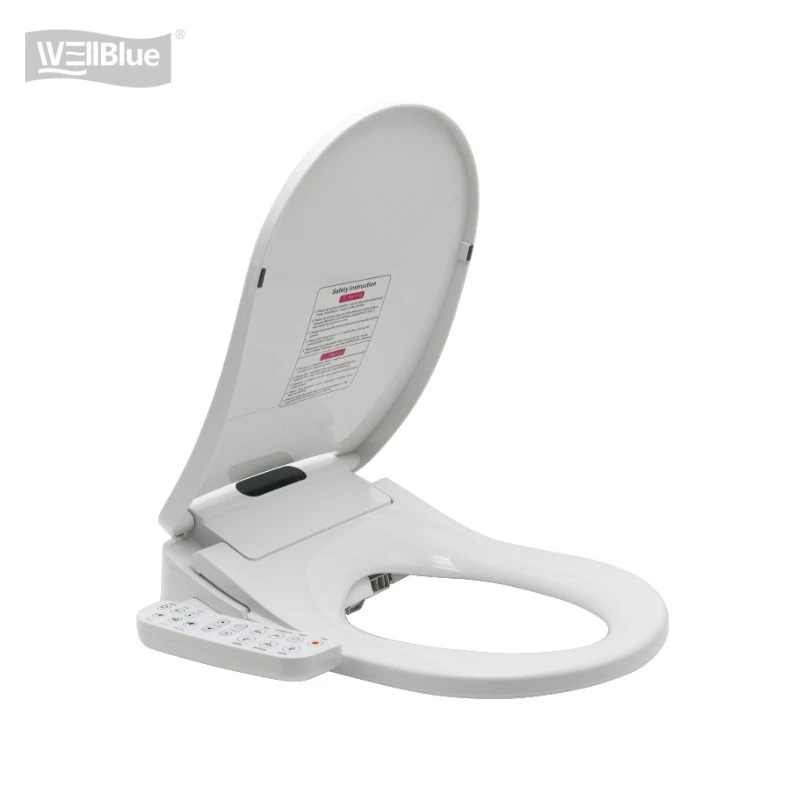
Design Principles of Remote Control Interaction Systems
The remote control feature of a remote-controlled toilet lid is its key differentiator from traditional products. Its interactive design must balance usability, reliability, and hygiene. There are two main solutions: wired remote control and wireless remote control modules.
1. Signal Transmission Mechanism
• Infrared Remote Control (IR): A common early solution, this method uses an infrared LED to transmit a coded signal (e.g., PWM modulation), which is then decoded by the receiver to execute the corresponding function. Its advantages include low cost, but it requires a straight, unobstructed transmission path and is susceptible to interference from ambient light.
• Radio Frequency Remote Control (RF, such as 2.4GHz/433MHz): A mainstream solution, this method uses radio waves to transmit signals through obstacles. Its remote control range can reach 5-10 meters, and it supports multi-device networking (e.g., differentiating between master and guest bathroom toilet lids). It also uses encryption protocols (e.g., AES) to prevent false triggering.
• Touchscreen Integration: Some high-end products integrate the remote control function directly into a touch panel on the side or top of the toilet lid. Capacitive touch sensors recognize gestures (e.g., swiping to adjust the temperature, tapping to switch modes), reducing reliance on external remote controls.
2. Optimizing Human-Computer Interaction Logic
The design prioritizes the "contactless" principle. For example, a pressure sensor can automatically detect seat occupancy, waking the standby system and enabling seat heating by default. Flushing modes can be intelligently recommended based on the duration of occupancy (e.g., a short-term default for men is a breechwash, while a long-term default for women is a feminine wash). In emergencies (e.g., accidentally triggering the flush), a physical stop button or a double-click on the remote control can be provided to cancel the function.
Key Technology Implementation and Challenges
The design of a remote-controlled toilet seat requires addressing multiple technical challenges to ensure safety, durability, and consistent user experience.
1. Water and Electrical Safety
Since high-voltage (main power), low-voltage (control circuit) and liquid water coexist, waterproofing and insulation design are crucial:
• The circuit board is treated with a conformal coating (moisture-proof, salt spray-proof, and mildew-proof), and a rubber seal is used to separate the water tank and control compartment.
• The nozzles and water pipes are made of food-grade silicone or antibacterial resin to prevent secondary contamination.
• A leakage protection module (such as a 10mA GFCI) monitors circuit anomalies in real time and shuts off power within 0.1 seconds of triggering.
2. Balancing Energy Consumption and Battery Life
In standby mode, power consumption is reduced to below 5mW through low-power modes (for example, the main control chip enters sleep mode, leaving only the pressure sensor powered). High-frequency components (such as seat heating) use PWM power regulation technology to dynamically adjust power based on ambient temperature (e.g., full power in winter, half power in summer).
3. Personalization and Intelligent Expansion
Modern remote-controlled toilet seats are increasingly integrating AI algorithms. These algorithms learn user habits through long-term usage data (e.g., prioritizing the feminine wash mode in the morning and automatically increasing seat temperature in winter). They also support remote control via mobile apps (e.g., presetting cleaning routines before leaving home). Some products also integrate with smart home systems (e.g., voice assistant control and linking with smart toilet tanks to adjust flush volume).
The design principle of remote-controlled toilet seats essentially uses mechatronics to transform traditional bathroom functions into programmable, interactive smart services. This approach relies on the synergy of multiple modules (mechanical actuation, electronic control, and human-computer interaction) and key technological breakthroughs (water and electricity safety, energy management, and precise sensing). With the development of the Internet of Things and new materials technologies, remote-controlled toilet seats will further evolve towards a "touchless experience" (e.g., automatic seat sensing and adaptive environmental adjustments) and "health monitoring" (e.g., analyzing the user's physiological status through flushing data), continuously improving users' quality of life.