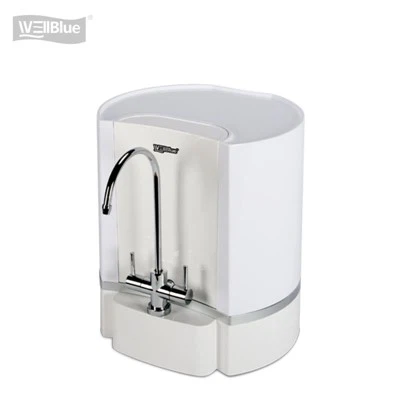
As a supplier of reverse osmosis (RO) water purifiers, I often encounter questions from customers regarding the capabilities of our products. One common query is whether an RO water purifier can remove manganese from water. In this blog post, I will delve into the science behind reverse osmosis technology and its effectiveness in removing manganese, providing you with the information you need to make an informed decision about your water purification needs.
Understanding Reverse Osmosis Technology
Reverse osmosis is a water purification process that uses a semi-permeable membrane to remove contaminants from water. The process works by applying pressure to the water on one side of the membrane, forcing it through the membrane while leaving behind impurities. The semi-permeable membrane has tiny pores that allow water molecules to pass through but block larger molecules and ions, including many contaminants.
The RO process typically consists of several stages, including pre-filtration, reverse osmosis, and post-filtration. Pre-filtration removes larger particles such as sediment, rust, and chlorine, which can damage the RO membrane. The reverse osmosis stage is where the majority of contaminants are removed, including dissolved solids, heavy metals, and microorganisms. Post-filtration further polishes the water, removing any remaining impurities and improving its taste.
Manganese in Water
Manganese is a naturally occurring element found in soil, rocks, and water. It is an essential nutrient for humans and animals, but high levels of manganese in drinking water can have negative health effects. Manganese can cause staining of laundry and plumbing fixtures, and it can also give water a bitter taste and odor. In addition, long-term exposure to high levels of manganese can lead to neurological problems, including tremors, muscle weakness, and cognitive impairment.
The maximum contaminant level (MCL) for manganese in drinking water set by the United States Environmental Protection Agency (EPA) is 0.05 milligrams per liter (mg/L). However, some states and municipalities have set more stringent standards. If your water contains manganese levels above the MCL, it is important to take steps to remove it.
Can a Reverse Osmosis Water Purifier Remove Manganese?
The short answer is yes, a reverse osmosis water purifier can remove manganese from water. The semi-permeable membrane used in RO systems is designed to block a wide range of contaminants, including manganese. However, the effectiveness of an RO system in removing manganese depends on several factors, including the quality of the membrane, the water pressure, and the initial concentration of manganese in the water.
In general, a high-quality RO system with a properly maintained membrane can remove up to 95% or more of the manganese in water. However, if the water contains very high levels of manganese, it may be necessary to use additional treatment methods, such as pre-treatment with an iron and manganese filter or post-treatment with a polishing filter.
Factors Affecting Manganese Removal
As mentioned earlier, several factors can affect the effectiveness of an RO system in removing manganese. Here are some of the key factors to consider:
- Membrane Quality: The quality of the RO membrane is one of the most important factors affecting manganese removal. A high-quality membrane with a tight pore structure will be more effective at blocking manganese and other contaminants.
- Water Pressure: The water pressure applied to the RO membrane is also important. If the water pressure is too low, the water may not pass through the membrane effectively, resulting in lower removal rates. On the other hand, if the water pressure is too high, it can damage the membrane and reduce its lifespan.
- Initial Manganese Concentration: The initial concentration of manganese in the water also affects the removal rate. If the water contains very high levels of manganese, it may be necessary to use additional treatment methods to achieve the desired removal rate.
- Membrane Fouling: Over time, the RO membrane can become fouled with contaminants, which can reduce its effectiveness in removing manganese and other contaminants. Regular maintenance, including membrane cleaning and replacement, is essential to ensure optimal performance.
Choosing the Right Reverse Osmosis Water Purifier
If you are considering purchasing an RO water purifier to remove manganese from your water, there are several factors to consider. Here are some tips to help you choose the right system for your needs:
- Capacity: Consider the size of your household and your daily water usage when choosing an RO system. Make sure the system you choose has a sufficient capacity to meet your needs.
- Membrane Quality: Look for an RO system with a high-quality membrane that is designed to remove a wide range of contaminants, including manganese.
- Filtration Stages: Choose an RO system with multiple filtration stages, including pre-filtration, reverse osmosis, and post-filtration. This will ensure that your water is thoroughly purified and free of contaminants.
- Certification: Look for an RO system that is certified by a reputable organization, such as the National Sanitation Foundation (NSF). This will ensure that the system meets strict standards for water purification and safety.
Our Reverse Osmosis Water Purifiers
At our company, we offer a range of high-quality reverse osmosis water purifiers that are designed to remove a wide range of contaminants, including manganese. Our Deluxe RO Water Filter Purifier is a top-of-the-line system that features a 7-stage filtration process, including a high-quality RO membrane and a post-carbon filter for improved taste. Our Stand Reverse Osmosis Water Purifier is a compact and affordable option that is perfect for small households.
In addition to our RO systems, we also offer Reverse Osmosis Water System Filter Change services to ensure that your system is operating at peak performance. Our team of experts can help you choose the right system for your needs and provide you with the support and maintenance you need to keep your water pure and safe.
Conclusion
In conclusion, a reverse osmosis water purifier can effectively remove manganese from water. However, the effectiveness of an RO system in removing manganese depends on several factors, including the quality of the membrane, the water pressure, and the initial concentration of manganese in the water. If you are concerned about the manganese levels in your water, we recommend having your water tested and consulting with a water treatment professional to determine the best course of action.


At our company, we are committed to providing our customers with high-quality water purification products and services. If you have any questions about our reverse osmosis water purifiers or would like to learn more about our products and services, please contact us today. We look forward to helping you achieve clean, safe, and great-tasting water.
References
- United States Environmental Protection Agency. (2023). Manganese in Drinking Water. Retrieved from https://www.epa.gov/dwstandardsregulations/manganese-drinking-water
- National Sanitation Foundation. (2023). NSF/ANSI 58: Reverse Osmosis Drinking Water Treatment Systems. Retrieved from https://www.nsf.org/standards/nsf-ansi-58-reverse-osmosis-drinking-water-treatment-systems