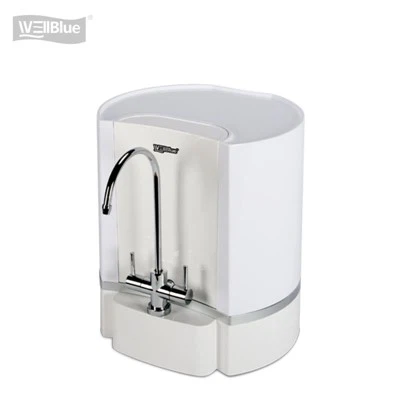
Scale build-up in a countertop instant heating RO water dispenser can significantly affect its performance and lifespan. As a trusted supplier of Countertop No Installation Required Water Purification, Wellblue Desktop Instant Heating RO Water Dispenser, and Countertop Instant Heating RO Water Purifier, I understand the importance of keeping these appliances in top - notch condition. In this blog, I'll share some effective strategies to prevent scale build - up in your countertop instant heating RO water dispenser.
Understanding Scale Build - Up
Before we delve into prevention methods, it's crucial to understand what scale is and how it forms. Scale is primarily composed of calcium and magnesium carbonate, which are minerals commonly found in hard water. When hard water is heated, these minerals precipitate out of the water and accumulate on the surfaces of the water dispenser, especially in the heating element and the water channels. Over time, this build - up can reduce the efficiency of the heating element, clog the water flow, and even cause damage to the dispenser.


Use Softened Water
One of the most straightforward ways to prevent scale build - up is to use softened water. Softened water has a lower concentration of calcium and magnesium ions, which means there are fewer minerals available to form scale. You can use a water softener at your home to treat the incoming water before it enters the dispenser. There are two main types of water softeners: salt - based and salt - free.
Salt - based water softeners work by replacing calcium and magnesium ions with sodium ions through a process called ion exchange. This effectively reduces the hardness of the water. Salt - free water softeners, on the other hand, use a physical process to change the structure of the calcium and magnesium minerals so that they don't form scale. While salt - free softeners don't actually remove the minerals from the water, they prevent them from adhering to surfaces.
Regular Cleaning
Regular cleaning is essential for preventing scale build - up. You should clean your countertop instant heating RO water dispenser at least once a month, or more frequently if you have very hard water. Here's a step - by - step guide on how to clean your dispenser:
- Unplug the dispenser: Before you start cleaning, make sure the dispenser is unplugged from the power source to avoid any electrical hazards.
- Empty the water tank: Remove the water tank from the dispenser and empty any remaining water.
- Prepare a cleaning solution: You can use a descaling agent specifically designed for water dispensers. Follow the instructions on the product label to prepare the solution. A common homemade alternative is a mixture of white vinegar and water. Mix equal parts of white vinegar and water in a container.
- Clean the water tank: Pour the cleaning solution into the water tank and let it sit for about 30 minutes. Then, use a soft brush or a sponge to scrub the inside of the tank, paying special attention to any areas with visible scale. Rinse the tank thoroughly with clean water.
- Clean the heating element and water channels: Some dispensers allow you to access the heating element and water channels for cleaning. If possible, use a small brush to gently clean these areas. You can also run the cleaning solution through the dispenser by filling the tank with the solution and dispensing it into a container. Let the solution sit in the dispenser for a while, then flush it out with clean water.
- Rinse the dispenser: After cleaning, rinse the entire dispenser, including the tank, the heating element, and the water channels, with clean water several times to remove any traces of the cleaning solution.
Install a Scale Prevention Filter
A scale prevention filter can be a valuable addition to your countertop instant heating RO water dispenser. These filters are designed to remove or reduce the concentration of scale - forming minerals in the water before it reaches the heating element. There are different types of scale prevention filters available on the market, such as sediment filters, carbon filters, and specialized anti - scale filters.
Sediment filters are used to remove large particles and debris from the water, while carbon filters can remove chlorine and other contaminants. Specialized anti - scale filters use various technologies, such as ion exchange, template - assisted crystallization, or physical filtration, to prevent scale formation. When choosing a scale prevention filter, make sure it is compatible with your water dispenser and your water quality.
Maintain the Right Temperature
The temperature at which the water is heated can also affect scale formation. Higher temperatures can cause the minerals in the water to precipitate more quickly, leading to faster scale build - up. Most countertop instant heating RO water dispensers allow you to adjust the temperature of the dispensed water. Try to set the temperature to a moderate level, around 80 - 90 degrees Celsius, instead of the maximum temperature. This can help reduce the rate of scale formation while still providing hot water for your needs.
Regular Maintenance Checks
In addition to cleaning and using preventive measures, regular maintenance checks are important to ensure the proper functioning of your countertop instant heating RO water dispenser. Inspect the dispenser regularly for any signs of scale build - up, such as reduced water flow, slower heating times, or unusual noises. If you notice any of these signs, take immediate action to clean the dispenser or address the issue.
You should also check the seals and gaskets of the dispenser to make sure they are in good condition. Leaky seals can allow water to escape and cause mineral deposits to form on the outside of the dispenser. Replace any worn - out seals or gaskets as soon as possible.
Keep the Dispenser Dry
When the dispenser is not in use, make sure to keep it dry. Moisture can promote the growth of bacteria and fungi, and it can also contribute to scale formation. After each use, wipe down the exterior of the dispenser with a dry cloth. If the dispenser has a removable drip tray, empty it regularly and dry it thoroughly before putting it back in place.
Follow the Manufacturer's Instructions
Every countertop instant heating RO water dispenser is different, and the manufacturer's instructions are the best source of information on how to maintain and prevent scale build - up in your specific model. Read the user manual carefully and follow the recommended cleaning and maintenance schedule. The manufacturer may also provide specific guidelines on the type of water to use, the cleaning products to avoid, and other important details.
Conclusion
Preventing scale build - up in your countertop instant heating RO water dispenser is essential for its performance, longevity, and the quality of the water it dispenses. By using softened water, cleaning the dispenser regularly, installing a scale prevention filter, maintaining the right temperature, performing regular maintenance checks, keeping the dispenser dry, and following the manufacturer's instructions, you can significantly reduce the risk of scale formation and ensure that your dispenser works efficiently for years to come.
As a supplier of high - quality countertop instant heating RO water dispensers, I'm committed to helping you get the most out of your product. If you have any questions or need further advice on preventing scale build - up or choosing the right water dispenser for your needs, don't hesitate to contact me. We're here to assist you in making the best decision for your home or office. Whether you're interested in our Countertop No Installation Required Water Purification, Wellblue Desktop Instant Heating RO Water Dispenser, or Countertop Instant Heating RO Water Purifier, we're ready to engage in a productive procurement discussion.
References
- "Water Quality and Treatment: A Handbook of Community Water Supplies." American Water Works Association.
- "The Homeowner's Guide to Water Quality." U.S. Environmental Protection Agency.
- Product manuals of various countertop instant heating RO water dispensers.