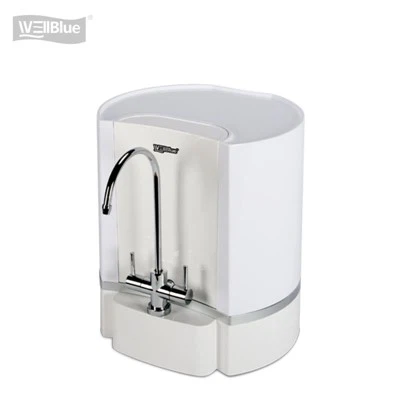
As a supplier of ultra filtration water filters, I've witnessed firsthand the diverse challenges and opportunities presented by different water qualities. One of the most significant factors that can impact the performance and longevity of an ultra filtration water filter is water hardness. In this blog post, I'll delve into the intricacies of water hardness and explore its effects on ultra filtration water filters.
Understanding Water Hardness
Water hardness refers to the concentration of dissolved minerals, primarily calcium and magnesium ions, in water. These minerals are picked up as water passes through rocks and soil, and their presence can vary significantly depending on the geographical location and the source of the water supply. Hard water typically contains high levels of calcium and magnesium, while soft water has lower concentrations.
The hardness of water is usually measured in parts per million (ppm) or grains per gallon (gpg). Water with a hardness level of less than 1 gpg is considered soft, while water with a hardness level of 7 gpg or more is considered hard. Moderately hard water falls between 1 and 7 gpg.
How Water Hardness Affects Ultra Filtration Water Filters
Ultra filtration water filters are designed to remove a wide range of contaminants from water, including bacteria, viruses, suspended solids, and some dissolved organic matter. They use a semi-permeable membrane with tiny pores that allow water molecules to pass through while blocking larger particles. However, water hardness can have several negative impacts on the performance and efficiency of these filters:
1. Membrane Fouling
One of the most significant challenges posed by hard water is membrane fouling. The calcium and magnesium ions in hard water can form scale deposits on the surface of the ultra filtration membrane. These scale deposits can clog the pores of the membrane, reducing its permeability and restricting the flow of water through the filter. As a result, the filter may experience a decrease in water production rate and an increase in operating pressure.
Over time, membrane fouling can also lead to irreversible damage to the membrane, reducing its lifespan and requiring more frequent replacement. This can significantly increase the operating costs of the ultra filtration system and disrupt the water treatment process.
2. Reduced Filtration Efficiency
In addition to membrane fouling, water hardness can also affect the filtration efficiency of ultra filtration water filters. The scale deposits on the membrane surface can create a barrier that prevents some contaminants from being effectively removed from the water. This can result in a decrease in the quality of the filtered water, as some bacteria, viruses, and other contaminants may pass through the membrane along with the water.
Furthermore, the presence of scale deposits can also interfere with the chemical reactions that occur during the filtration process, such as the disinfection of water using chlorine or other disinfectants. This can reduce the effectiveness of the disinfection process and increase the risk of waterborne diseases.
3. Increased Energy Consumption
As the membrane becomes fouled and the flow of water through the filter is restricted, the ultra filtration system may need to operate at higher pressures to maintain the desired water production rate. This can increase the energy consumption of the system, resulting in higher operating costs and a greater environmental impact.
In addition, the increased pressure can also put additional stress on the membrane and other components of the filtration system, increasing the risk of mechanical failure and reducing the overall reliability of the system.
Mitigating the Effects of Water Hardness on Ultra Filtration Water Filters
While water hardness can pose significant challenges to the performance and efficiency of ultra filtration water filters, there are several strategies that can be employed to mitigate these effects:
1. Water Softening
One of the most effective ways to reduce the impact of water hardness on ultra filtration water filters is to pre-treat the water using a water softener. Water softeners work by removing the calcium and magnesium ions from the water through a process called ion exchange. This process involves replacing the calcium and magnesium ions with sodium or potassium ions, which do not form scale deposits.


By pre-treating the water with a water softener, the risk of membrane fouling and other problems associated with water hardness can be significantly reduced. This can help to extend the lifespan of the ultra filtration membrane, improve the filtration efficiency of the system, and reduce the operating costs.
2. Chemical Cleaning
Regular chemical cleaning of the ultra filtration membrane is another important strategy for mitigating the effects of water hardness. Chemical cleaning involves using a cleaning solution to remove the scale deposits and other contaminants from the membrane surface. The cleaning solution typically contains a combination of acids, alkalis, and detergents, which are designed to dissolve the scale deposits and break down the organic matter.
The frequency of chemical cleaning depends on the water quality and the operating conditions of the ultra filtration system. In general, it is recommended to perform chemical cleaning at least once every few months to prevent the build-up of scale deposits and maintain the performance of the membrane.
3. Membrane Selection
Choosing the right ultra filtration membrane is also crucial for minimizing the impact of water hardness on the filtration system. Some membranes are more resistant to fouling and scaling than others, and they may be better suited for use in hard water applications. When selecting a membrane, it is important to consider factors such as the pore size, material, and surface properties of the membrane, as well as its compatibility with the cleaning chemicals and other components of the system.
Conclusion
Water hardness can have a significant impact on the performance and efficiency of ultra filtration water filters. The scale deposits formed by the calcium and magnesium ions in hard water can cause membrane fouling, reduce the filtration efficiency, and increase the energy consumption of the system. However, by implementing appropriate pre-treatment measures, such as water softening and chemical cleaning, and by choosing the right membrane, these effects can be effectively mitigated.
As a supplier of ultra filtration water filters, we understand the importance of providing our customers with high-quality products and solutions that are tailored to their specific needs. We offer a wide range of Stainless Steel Water Filter, Alkaline UF Water Filter Machine, and Ultra Water Filter that are designed to handle different water qualities and operating conditions. Our team of experts can also provide you with professional advice and support to help you choose the right filtration system for your application and ensure its optimal performance.
If you're interested in learning more about our ultra filtration water filters or have any questions about water treatment, please don't hesitate to contact us. We look forward to working with you to provide you with the best possible water filtration solutions.
References
- AWWA (American Water Works Association). (2017). Water Quality and Treatment: A Handbook of Community Water Supplies. McGraw-Hill Education.
- Crittenden, J. C., Trussell, R. R., Hand, D. W., Howe, K. J., & Tchobanoglous, G. (2012). MWH's Water Treatment: Principles and Design. John Wiley & Sons.
- Mallevialle, J., Benedek, D., & Kawamura, S. (1996). Ultrafiltration and Microfiltration Handbook. Technomic Publishing Company.