What is the pore size of an ultra filtration water filter? Well, I'm super stoked to chat about this as I'm part of an ultra filtration water filter supplier.
Let's first dig into what ultrafiltration is all about. Ultrafiltration is like a super - fine net for water. It's a process that uses a membrane to separate different substances in water based on their size. And the key player here is the pore size of that membrane.
The pore size of an ultrafiltration water filter typically ranges from about 0.01 to 0.1 micrometers. That's incredibly tiny! To put it into perspective, a human hair is about 70 - 100 micrometers in diameter. So, these pores are hundreds of times smaller than a hair.
Why is this size so important? Well, it allows the filter to trap a whole bunch of nasties in the water. Bacteria, which can be around 0.2 to 2 micrometers in size, are easily caught by the filter. Most viruses are also too large to pass through, although some of the smallest ones might still slip through depending on the exact pore size.
Particles like sediment, rust, and some colloidal matter are also effectively removed. These are usually larger than the pore size of the ultrafiltration membrane. This means that when you use an ultrafiltration water filter, you're getting water that's much cleaner and safer to drink.


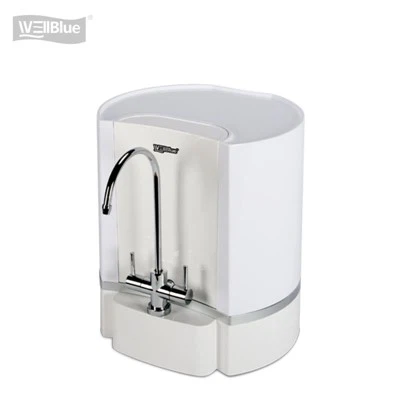
Now, let's talk about how this relates to the products we offer. We have a wide range of ultrafiltration water filters, each designed to meet different needs. For example, our Under Sink Water Filter Purifiers are great for households. They can be easily installed under the sink and provide a continuous supply of clean water. The pore size of the membranes in these filters is optimized to remove common contaminants in household water, like bacteria, sediment, and some organic matter.
Then there's our Ultra Filtration Mineral Water Filter. This one is pretty special. While it filters out the bad stuff, it also retains some essential minerals in the water. The carefully selected pore size allows water and small mineral particles to pass through while keeping contaminants at bay. This way, you get water that's not only clean but also has some of the beneficial minerals that your body needs.
Our Stainless Steel Water Filter is another great option. It's durable and has a high - quality ultrafiltration membrane. The specific pore size in this filter is chosen to ensure long - lasting performance and efficient filtration. Whether you're using it in a home or a small office, it'll do a fantastic job of purifying water.
The pore size of ultrafiltration water filters gives them the ability to target different types of contaminants. A smaller pore size will catch more things, but it might also slow down the flow of water. So, our engineers have to find that sweet spot between filtration efficiency and flow rate.
In industrial settings, where water quality standards are often much higher, ultrafiltration water filters with very specific pore sizes are used. For example, in the pharmaceutical industry, they need water that's almost completely free of any contaminants. Our ultrafiltration filters can be customized to meet these extremely strict requirements by adjusting the pore size of the membranes.
When it comes to maintenance, the pore size plays a role here too. Over time, the pores can get clogged with the trapped particles. This is why we recommend regular maintenance of our filters. Cleaning or replacing the membrane based on usage can help keep the filter working at its best.
If you're thinking about getting an ultrafiltration water filter, there are a few things to consider regarding the pore size. If you're in an area with a lot of large sediment and bacteria in the water, a filter with a slightly larger pore size might be a good start. This can handle the larger particles without getting clogged too quickly. But if you're worried about smaller contaminants like some viruses, you'll want a filter with a smaller pore size.
So, to sum it all up, the pore size of an ultrafiltration water filter is a critical factor. It determines what can and can't pass through the membrane, which in turn affects the quality of the filtered water. We've put a lot of time and effort into designing our filters with the right pore sizes for different applications.
If you're interested in learning more about our ultrafiltration water filters or are thinking about making a purchase, don't hesitate to reach out. We're here to answer any questions you might have and help you find the perfect filter for your needs. Whether it's for your home, office, or an industrial project, we've got you covered.
References
- "Water Treatment Principles and Design" by Wilbert W. Westcott, et al.
- "Ultrafiltration Membrane Technology" by R. Bowen and A. Mohammad.