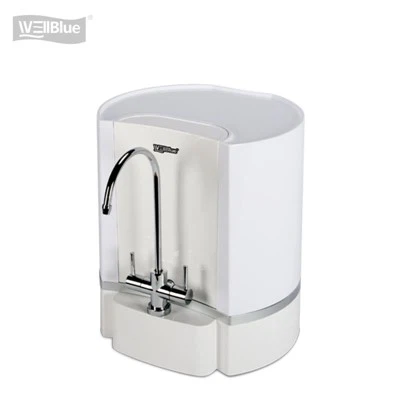
Chlorine is a common disinfectant used in water treatment facilities to kill harmful bacteria and viruses. While it serves an important purpose in ensuring water safety, the presence of chlorine in tap water can also have some negative effects, such as an unpleasant taste and odor, and potential health risks over long - term exposure. As a supplier of hot and cold RO (Reverse Osmosis) water purifiers, I'm often asked how our products deal with chlorine in water. In this blog, I'll explain the process in detail.
The Basics of RO Water Purification
Reverse osmosis is a water purification technology that uses a semi - permeable membrane to remove ions, molecules, and larger particles from water. The process works by applying pressure to the water on one side of the membrane, forcing it through the tiny pores of the membrane while leaving behind contaminants. This membrane is designed to be highly selective, allowing only water molecules to pass through while blocking most impurities, including chlorine.
Our hot and cold RO water purifiers are equipped with a multi - stage filtration system. The RO membrane is the heart of the system, but it is often preceded by other pre - filters that play a crucial role in the overall purification process, especially when it comes to dealing with chlorine.
Pre - filtration and Chlorine Removal
The first line of defense in our hot and cold RO water purifiers against chlorine is the pre - filter stage. A common type of pre - filter used in our systems is the activated carbon filter. Activated carbon is a highly porous material with a large surface area. It has a strong affinity for chlorine and other organic compounds.
When water passes through the activated carbon filter, chlorine molecules are attracted to the surface of the carbon and are adsorbed. The porous structure of the activated carbon provides countless sites for chlorine to bind to, effectively removing it from the water. This pre - treatment is essential because chlorine can damage the RO membrane over time. If chlorine is not removed before the water reaches the RO membrane, it can oxidize the membrane material, reducing its effectiveness and lifespan.
In addition to activated carbon filters, some of our advanced hot and cold RO water purifiers may also include sediment filters in the pre - filtration stage. Although sediment filters are primarily designed to remove larger particles such as sand, silt, and rust, they can also help in the overall purification process by removing some of the larger debris that may be carrying chlorine - related compounds.
The Role of the RO Membrane in Chlorine Removal
Once the water has passed through the pre - filters and most of the chlorine has been removed, it then reaches the RO membrane. The RO membrane is made of a thin, semi - permeable material with pores so small that only water molecules can pass through under pressure.


Chlorine, in its various forms (such as free chlorine and combined chlorine), is a relatively large molecule compared to water. The RO membrane acts as a physical barrier, preventing these chlorine molecules from passing through. As a result, the water that emerges from the RO membrane is virtually free of chlorine.
The efficiency of the RO membrane in removing chlorine depends on several factors, including the quality of the membrane, the pressure applied during the filtration process, and the initial concentration of chlorine in the water. Our hot and cold RO water purifiers are designed to optimize these factors to ensure maximum chlorine removal.
Post - filtration and Final Treatment
After the water has passed through the RO membrane, it may go through a post - filtration stage. This stage is mainly for polishing the water and ensuring that any remaining trace impurities, including very small amounts of chlorine that may have escaped the previous filtration steps, are removed.
Another activated carbon filter may be used in the post - filtration stage. This final carbon filter can further improve the taste and odor of the water by removing any residual chlorine or other contaminants that may have been introduced during the RO process or from the storage tank.
Benefits of Removing Chlorine with Our Hot and Cold RO Water Purifiers
- Improved Taste and Odor: Chlorine can give water a distinct, unpleasant taste and odor. By removing chlorine, our hot and cold RO water purifiers produce water that tastes and smells fresh, making it more enjoyable to drink.
- Health Benefits: Long - term exposure to chlorine in drinking water has been associated with potential health risks, such as an increased risk of certain cancers and respiratory problems. Our water purifiers help reduce these risks by removing chlorine from the water.
- Protection of Appliances: Chlorine can also cause damage to household appliances that use water, such as coffee makers, kettles, and washing machines. By providing chlorine - free water, our hot and cold RO water purifiers can extend the lifespan of these appliances.
Different Models and Their Chlorine - Removal Capabilities
We offer a range of hot and cold RO water purifiers to meet different customer needs. For example, our Alkaline Hot And Cold Water Purifier Dispenser not only removes chlorine but also adds beneficial minerals to the water, making it alkaline. This model is popular among customers who are concerned about both water purity and the health benefits of alkaline water.
Our Hot And Warm RO Water Filter is designed for those who need a reliable source of hot and warm water for various purposes, such as making tea or coffee. It has a high - efficiency filtration system that effectively removes chlorine and other contaminants.
The Hot And Cold Water Purifier Dispenser is a versatile option that provides both hot and cold water on demand. It is equipped with advanced filtration technology to ensure maximum chlorine removal and overall water purity.
Conclusion
Our hot and cold RO water purifiers are designed to effectively deal with chlorine in water through a multi - stage filtration process. From the pre - filtration stage with activated carbon and sediment filters to the RO membrane and post - filtration, each step plays a vital role in removing chlorine and other contaminants. The result is clean, fresh - tasting water that is free of chlorine and safe for consumption.
If you are interested in learning more about our hot and cold RO water purifiers or would like to discuss your specific water purification needs, we invite you to reach out to us for a procurement discussion. We are committed to providing high - quality water purification solutions that meet your requirements.
References
- "Water Treatment and Purification" by the American Water Works Association.
- "Reverse Osmosis Technology: Principles and Applications" by M. S. W. J. Verkerk.
- "Activated Carbon in Water Treatment" by the Environmental Protection Agency.