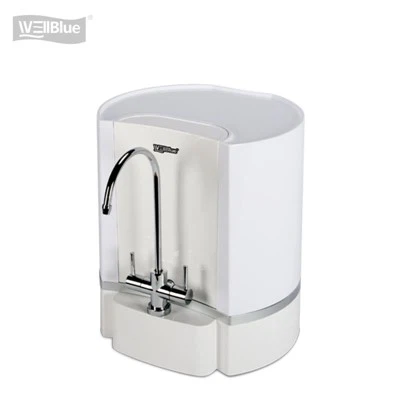
As a supplier of hot and cold RO water purifiers, I am often asked about the working principle of these innovative devices. In this blog post, I will delve into the details of how hot and cold RO water purifiers function, providing you with a comprehensive understanding of their operation.
Reverse Osmosis (RO) Process
The heart of a hot and cold RO water purifier is the reverse osmosis process. Reverse osmosis is a water purification method that uses a semi - permeable membrane to remove ions, molecules, and larger particles from water. Here's a step - by - step breakdown of the RO process in a water purifier:
-
Pre - filtration: Before the water reaches the RO membrane, it goes through a series of pre - filters. These filters are designed to remove large particles such as sediment, sand, and rust. A sediment filter is usually the first line of defense, followed by a carbon filter. The carbon filter helps to remove chlorine, volatile organic compounds (VOCs), and unpleasant odors and tastes from the water. This pre - treatment is crucial as it protects the RO membrane from damage and extends its lifespan.
-
Pressurization: Once the water has passed through the pre - filters, it is pressurized. A high - pressure pump is used to force the water through the semi - permeable RO membrane. The pressure is necessary because the membrane has extremely small pores that only allow water molecules to pass through, while blocking most contaminants.
-
Reverse osmosis through the membrane: The semi - permeable membrane in an RO system has pores that are about 0.0001 microns in size. This is small enough to block almost all dissolved salts, bacteria, viruses, and other contaminants. As the pressurized water passes through the membrane, pure water (permeate) is collected on one side, while the concentrated contaminants (reject or brine) are flushed out of the system.
-
Post - filtration: After the water has passed through the RO membrane, it undergoes post - filtration. A final carbon filter is often used to further polish the water, removing any remaining traces of taste or odor. This ensures that the water coming out of the purifier is of the highest quality.
Heating and Cooling Mechanisms
In addition to the RO purification process, hot and cold RO water purifiers have special mechanisms for heating and cooling the purified water.
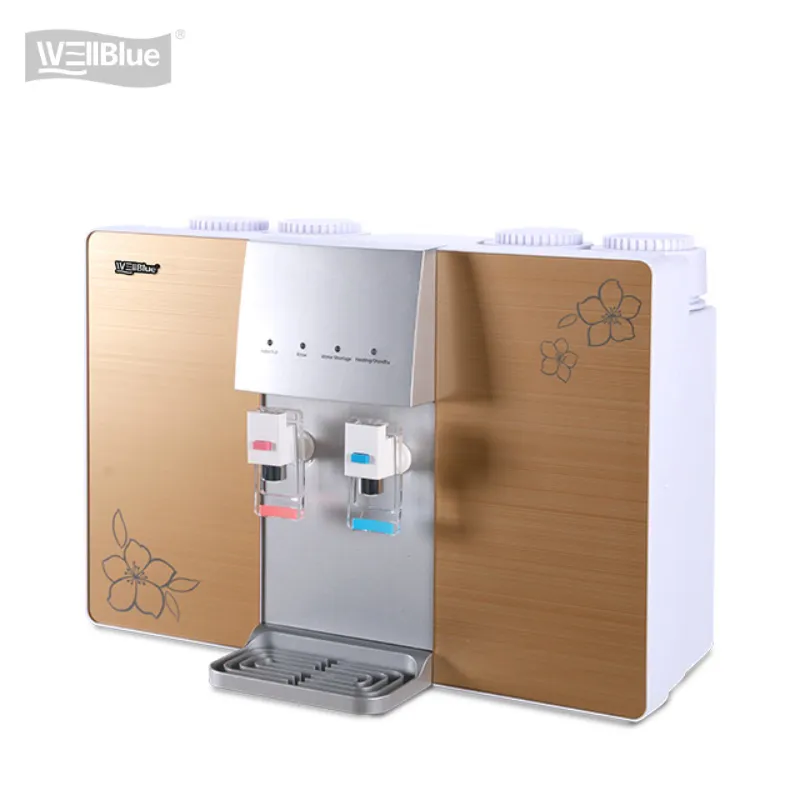

Heating Mechanism
The heating element in a hot and cold RO water purifier is typically a high - wattage electric heater. When you press the hot water dispenser button, the following steps occur:
- Water intake: A small amount of purified water is drawn from the storage tank into the heating chamber.
- Heating process: The electric heater quickly heats the water to a pre - set temperature, usually around 85 - 95 degrees Celsius. This temperature is high enough to kill any remaining bacteria or pathogens and make the water suitable for making hot beverages such as tea, coffee, or instant soups.
- Dispensing: Once the water has reached the desired temperature, a solenoid valve opens, allowing the hot water to flow out of the dispenser.
Cooling Mechanism
The cooling mechanism in a hot and cold RO water purifier is based on a refrigeration cycle. Here's how it works:
- Compressor operation: The compressor in the refrigeration system compresses a refrigerant gas, raising its temperature and pressure.
- Condensation: The high - pressure, high - temperature refrigerant gas then flows through a condenser coil. As it passes through the coil, it releases heat to the surrounding environment and condenses into a liquid.
- Expansion: The liquid refrigerant then passes through an expansion valve, which reduces its pressure. As the pressure drops, the refrigerant evaporates, absorbing heat from the water in the cooling tank.
- Cooling the water: The cold refrigerant in the evaporator coil cools the water in the storage tank. A thermostat is used to maintain the water at a constant low temperature, usually around 5 - 10 degrees Celsius. When you press the cold water dispenser button, cold water is dispensed from the tank.
Different Types of Hot and Cold RO Water Purifiers
There are several types of hot and cold RO water purifiers available in the market, each with its own features and benefits.
- Hot And Warm RO Water Filter: This type of purifier offers both hot and warm water options. The warm water can be used for various purposes such as making baby formula or for drinking without the need for extremely hot water.
- Hot And Cold Water Purifier Dispenser: These purifiers are designed with a built - in dispenser, making it convenient to access both hot and cold water. They are often used in offices, homes, and public places.
- Alkaline Hot And Cold Water Purifier Dispenser: In addition to providing hot and cold water, these purifiers also add minerals to the water to make it alkaline. Alkaline water is believed to have several health benefits, such as neutralizing acid in the body and improving hydration.
Why Choose Our Hot and Cold RO Water Purifiers
As a supplier, we take pride in offering high - quality hot and cold RO water purifiers. Our products are designed with the latest technology to ensure efficient purification, reliable heating and cooling, and long - term durability.
- Advanced RO membranes: We use state - of - the - art RO membranes that provide superior filtration, removing up to 99% of contaminants from the water.
- Energy - efficient design: Our heating and cooling mechanisms are designed to be energy - efficient, helping you save on electricity bills without compromising on performance.
- Safety features: All our purifiers are equipped with safety features such as over - heat protection for the heating element and leakage protection for the refrigeration system. This ensures the safety of users at all times.
Contact Us for Purchase and Negotiation
If you are interested in purchasing our hot and cold RO water purifiers, we invite you to contact us for further negotiation. Whether you are looking for a single unit for your home or a bulk order for your business, we can provide you with the best solutions at competitive prices. Our team of experts is ready to answer all your questions and guide you through the purchasing process.
References
- "Water Treatment Handbook" by Water Quality Association.
- "Principles of Reverse Osmosis" by the American Membrane Technology Association.
- "Refrigeration and Air Conditioning Technology" by William C. Whitman, William M. Johnson, and John Tomczyk.