Hey there! As a supplier of ultra filtration water filters, I've seen firsthand the importance of backwashing in keeping these systems running smoothly. In this blog post, I'm gonna break down what backwashing is, why it's crucial for ultra filtration water filters, and the effects it has on the overall performance of the system.
Let's start with the basics. What exactly is backwashing? Well, in simple terms, backwashing is a process where water is pumped in the opposite direction through the ultra filtration membrane. This is done to remove the accumulated particles, debris, and contaminants that have been trapped on the surface of the membrane during the normal filtration process. You see, as water passes through the ultra filtration membrane, tiny pores in the membrane act like a sieve, allowing water molecules to pass through while blocking larger particles such as bacteria, viruses, and suspended solids. Over time, these particles build up on the membrane surface, creating a layer of fouling that can reduce the flow rate and efficiency of the filter.
So, what's the big deal if the membrane gets a little dirty? Well, a fouled membrane can lead to a whole host of problems. First of all, it can significantly reduce the flow rate of the water through the filter. This means that you'll get less clean water per unit of time, which can be a major inconvenience, especially in commercial or industrial settings where large volumes of water are needed. Additionally, a fouled membrane can increase the pressure drop across the filter. This means that the pump has to work harder to push the water through the membrane, which can lead to increased energy consumption and wear and tear on the pump.
Now, let's talk about the effects of backwashing on an ultra filtration water filter. One of the most immediate effects is the restoration of the flow rate. By reversing the flow of water and dislodging the accumulated particles, backwashing effectively cleans the membrane surface and allows water to flow through more freely. This means that you'll get more clean water per unit of time, which is great news for both residential and commercial users.
Another important effect of backwashing is the extension of the membrane's lifespan. A fouled membrane is more likely to suffer from physical damage and chemical degradation, which can shorten its lifespan and require more frequent replacement. By regularly backwashing the filter, you can prevent the build-up of fouling and keep the membrane in good condition for longer. This not only saves you money on replacement membranes but also reduces the environmental impact of filter disposal.
Backwashing also helps to maintain the quality of the filtered water. A fouled membrane may not be able to effectively remove all the contaminants from the water, which can lead to a decrease in water quality. By cleaning the membrane through backwashing, you can ensure that the filter continues to operate at its optimal level and provide you with clean, safe drinking water.
Now, let's take a look at how backwashing works in practice. Most ultra filtration water filters are equipped with a backwashing system that is automated and controlled by a timer or a pressure sensor. When the system detects that the pressure drop across the filter has reached a certain level or that a certain amount of time has passed since the last backwash, it will automatically initiate the backwashing process.


During backwashing, the flow of water through the filter is reversed, and a small amount of clean water is pumped through the membrane in the opposite direction. This dislodges the accumulated particles and flushes them out of the system. In some cases, air or chemicals may also be used in conjunction with the backwashing water to enhance the cleaning effect.
It's important to note that the frequency and duration of backwashing will depend on a number of factors, including the quality of the feed water, the flow rate of the filter, and the type of membrane used. In general, filters that are used to treat water with a high level of contaminants will require more frequent backwashing than those used to treat relatively clean water.
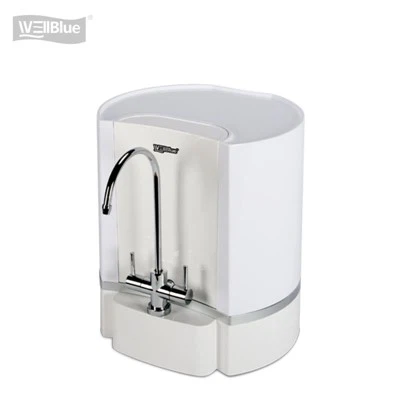
As a supplier of ultra filtration water filters, I offer a range of products that are designed to meet the needs of different users. Whether you're looking for a Ultra Filtration Water Filter Purifier for your home or a Ultra Water Filter for your business, I've got you covered. My filters are equipped with advanced backwashing systems that are easy to operate and maintain, ensuring that you get the most out of your investment.
If you're in the market for an ultra filtration water filter, I also offer a Ultra Filtration Mineral Water Filter that not only removes contaminants but also retains essential minerals in the water. This is a great option for those who are looking for a more natural and healthy way to filter their water.
In conclusion, backwashing is an essential process for maintaining the performance and longevity of an ultra filtration water filter. By regularly backwashing your filter, you can ensure that it continues to provide you with clean, safe drinking water at an optimal flow rate. If you're interested in learning more about our ultra filtration water filters or have any questions about backwashing, feel free to reach out. I'd be more than happy to discuss your specific needs and help you find the right solution for your home or business.
References
- "Ultrafiltration Membrane Filtration Handbook"
- "Water Treatment Plant Design"
- Industry reports on water filtration technology